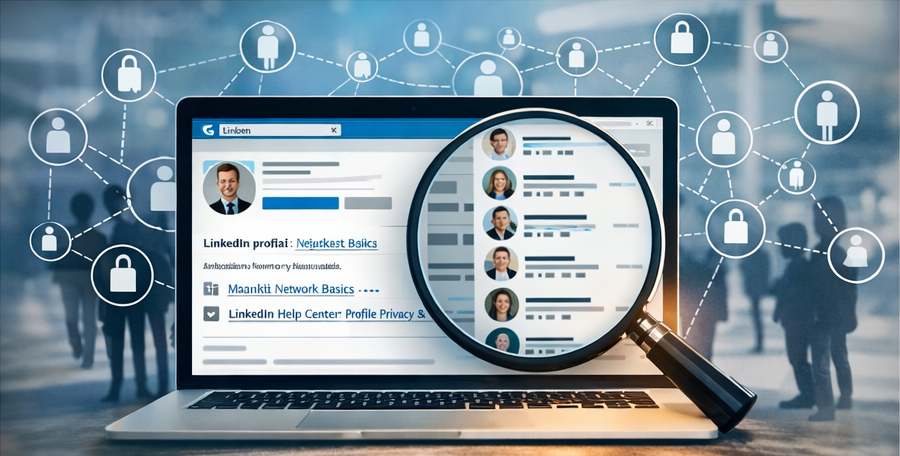
Sosiaalisen median kontaktien julkinen näkyvyys on kaksiteräinen miekka erityisesti juristeille. Avoin verkosto voi lisätä uskottavuutta, helpottaa verkostoitumista ja vahvistaa ammatillista näkyvyyttä.
Samalla se voi kuitenkin altistaa asiakassuhteet epäsuoralle paljastumiselle, kilpailijoiden verkosto-onginnalle sekä tietoturvariskeille, kuten kohdennetuille huijausyrityksille.
Lakimiehillä on korostunut velvollisuus suojella asiakkaidensa luottamuksellisuutta. Siksi kontaktien julkinen näkyvyys ei aina ole linjassa hyvän asianajotavan tai riskienhallinnan kanssa.
Suositeltava toimintamalli useimmille juristeille voi olla:
- Julkinen ja ammattimainen profiili.
- Seuraajien salliminen.
- Kontaktien pitäminen yksityisinä.
Näin voidaan säilyttää ammatillinen uskottavuus ilman tarpeetonta altistumista riskeille.
Should Lawyers Make Their LinkedIn Contact Lists Public?
In today’s professional environment, LinkedIn has become a central platform for networking, reputation building, and professional visibility. For lawyers and licensed trial counsel, however, the decision to make one’s LinkedIn contact list visible to the public is not purely a marketing question —
it is also a matter of confidentiality, professional responsibility, and risk management.
Potential Benefits of Public Contact Lists
Transparency and credibility are often cited as key benefits. A visible network can signal professional standing, industry involvement,
and access to relevant expertise. In business development contexts, openness may facilitate introductions and strengthen trust with potential clients or collaborators.
Public contact lists can also make it easier for colleagues to identify mutual connections, enabling smoother referrals and professional cooperation.
Risks and Downsides
However, for legal professionals, particularly those working in sensitive areas such as criminal law, asylum matters, human rights, or corporate disputes,
publicly visible contact lists may expose client relationships or reveal strategic associations. Even if no confidential information is directly disclosed,
the visibility of connections can create indirect exposure risks.
Another significant concern is network mining. Competitors may identify and approach key contacts or clients. In addition, publicly visible networks
increase vulnerability to social engineering attacks, targeted phishing attempts, and impersonation schemes.
Confidentiality and Professional Duty
Legal practice is fundamentally grounded in trust and confidentiality. While LinkedIn promotes openness, lawyers must carefully assess whether
public contact visibility aligns with their duty of care toward clients. In many cases, limiting contact visibility may better serve client protection
and professional integrity.
Strategic Recommendation
For most legal professionals, a balanced approach is advisable:
- Maintain a professional public profile.
- Allow followers and general visibility.
- Keep the contact list private.
This approach preserves credibility and professional presence while minimizing unnecessary exposure risks.
Sources:
- LinkedIn Help Center – Profile Privacy Settings: https://www.linkedin.com/help/linkedin/answer/66
- Harvard Business Review – Your Coworkers Are Watching Your LinkedIn: https://hbr.org/2016/01/your-coworkers-are-watching-your-linkedin
- American Bar Association – Law Firm Cybersecurity: https://www.americanbar.org/groups/law_practice/resources/law-technology-today/2018/cybersecurity/